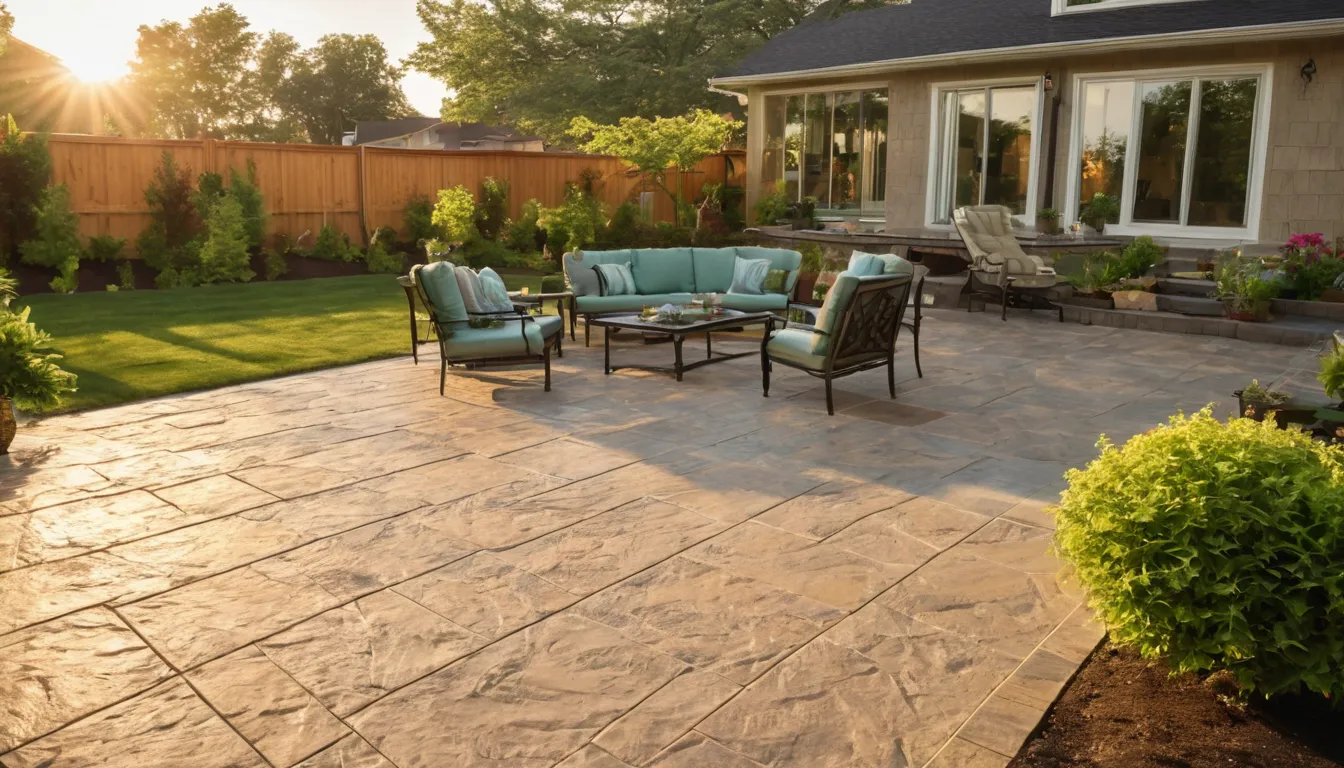
Need residential concrete patios in Haymarket?
Request an estimate and describe your driveway or patio project. A provider in our network can follow up. Prefer talking? Request a callback to check provider availability.
No obligationRequest an estimate for your patio
A concrete patio is a flat outdoor surface poured in place, then finished so it is safe to walk on and pleasant to sit on. It can be plain and simple, or colored and stamped to look like stone, brick, or slate.
Huntallow Concrete is a referral service. We do not pour, finish, or haul anything ourselves. We listen to your project, pass it to an independent provider in our network near Haymarket, and explain each step so nothing feels like a surprise. Connector, not contractor. The provider handles the work, the pricing, and the schedule, and you decide whether to move forward.
Think of baking bread. If the kitchen is too cold, the dough will not rise. If it is too hot, the crust dries before the inside is ready. Fresh concrete is much the same. It needs steady, mild conditions while it hardens.
In the Haymarket area, that means the calendar matters. Spring and early fall usually give the calmest pour windows. Summer humidity and winter freeze-thaw cycles make the job harder.
Good providers fill their schedules weeks ahead when the weather turns pleasant. If you ask early, you have more choices and less pressure. Request a callback to check provider availability for your season.
A patio is a slab of concrete poured over a prepared bed of compacted stone. It is part of what trades call concrete flatwork, the same family as walkways and pads. The slab is thin compared with its footprint, so what lies underneath it does most of the work.
Concrete is sturdy, it takes grills and heavy furniture without complaint, and it can be shaped to nearly any outline. Its upkeep is light compared with wood decking, which needs staining and board replacement.
Stamped concrete patios are poured like any other slab, then pressed with patterned mats while still soft. Color is added so the surface resembles flagstone, brick, or slate. You get the look of a costly material on a slab that is still poured in one piece.
Most projects follow the same path: layout, digging, base stone, forms, reinforcement, the pour, finishing, and curing. Each provider describes the steps a little differently, so ask for them in writing.
Imagine setting a table on a rug full of lumps. It would wobble, no matter how fine the table. A slab on loose soil behaves the same way. A level, compacted base is what keeps your patio from settling and cracking later.
Start with how you will use it. A bistro table for two needs far less room than a grill, a dining set, and a few chairs. Many homeowners find that a space about ten to twelve feet on each side suits a small family.
Mark the outline with a garden hose or spray paint and live with it for a weekend. Then walk it with a chair in hand. A colonial or split-level backyard often has less room than it first appears.
The surface decides how the patio feels underfoot, so pick it with care.
Water is like a shopper in a hurry: it takes the easiest path downhill. If that path leads toward your house, the soil near the foundation stays wet, and freeze-thaw winters make that worse.
A patio should slope gently away from the house, usually about one-quarter inch per foot. If you already see cracks in basement walls or doors that stick, ask a foundation repair expert to look before concrete goes down. A provider can often point out drainage concerns while planning the layout.
We are a connector. Your request goes to an independent provider in our network, and that provider speaks with you directly about the plan, price, and timing. Huntallow Concrete does not do the work and does not set the price.
You are choosing someone to spend several days at your home, so compare more than the total. Ask about their base preparation, the thickness of the slab, and how they handle control joints, the planned lines that guide where concrete cracks.
Slow down, then pour. A few questions now save regret later.
Concrete keeps getting stronger for weeks, but it still needs a gentle start. Think of a new haircut: you can go outside, you just do not want to fuss with it yet.
Keep heavy loads and sharp tools off the slab as your provider advises. Skip de-icing salts in the first winter, since they can flake the surface.
Sweep often, rinse away spills, and reseal as the provider recommends, usually every two to three years. Keep gutters clear so water does not pool near the slab, and fill tiny cracks before winter moisture gets in. The same care helps avoid concrete driveway repair or patio patching down the road.
The provider walks the space with you, marks the outline, and talks through slope, size, and finish choices.
Old soil is dug out and compacted stone is laid so the slab sits on firm, even ground.
Wood forms hold the shape while steel mesh or rebar helps the slab resist cracking.
Concrete is placed, textured, and then kept damp so it hardens slowly and evenly.
Prices vary a lot by region, size, access, and finish. These are general U.S. ranges only, not quotes. Always ask your provider for a written estimate that lists every line.
| Item | Typical range | Notes |
|---|---|---|
| Broom-finish slab | $6 – $12 per sq ft | Plain gray, standard base and mesh |
| Stamped concrete patio | $12 – $25 per sq ft | Pattern work and color add labor |
| Exposed aggregate | $8 – $18 per sq ft | Stones show through; hides stains |
| Integral color upgrade | $1 – $3 per sq ft | Tint is mixed in before the pour |
| Old slab removal | $2 – $6 per sq ft | Depends on thickness and hauling |
| Sealer application | $1 – $3 per sq ft | Often repeated every few years |
Share your address, rough size, and finish ideas through the estimate form. It only takes a few minutes.
Your details go to an independent provider in our network who serves your area.
The provider reviews the plan with you, visits the site, and gives a written quote.
You decide whether to proceed, and the provider sets dates that suit the weather.
Huntallow Concrete only connects you. Independent providers do the work and set their own prices.
We explain each step in simple words so you know what questions to ask.
Request an estimate, compare, and decide at your own pace. There is no obligation.
After the pour, we share easy care habits that help concrete handle humid summers and icy winters.
Request an estimate and describe your driveway or patio project. A provider in our network can follow up. Prefer talking? Request a callback to check provider availability.
No obligationMost residential patios are about four inches thick, set on a compacted stone base. Heavier loads, like a hot tub or a vehicle, may call for thicker concrete. Ask your provider what suits your plan.
Light foot traffic is often fine after a few days, but furniture and heavy items usually wait about a week. Full strength takes around a month. Your provider will give timing for your mix and weather.
Not much harder. Stamped concrete is usually sealed to protect color and pattern, and the seal needs refreshing every few years. Sweeping and occasional rinsing handle the rest of the care.
Request an estimate and describe your driveway or patio project. A provider in our network can follow up. Prefer talking? Request a callback to check provider availability.
No obligation